Posted on: November 19, 2026
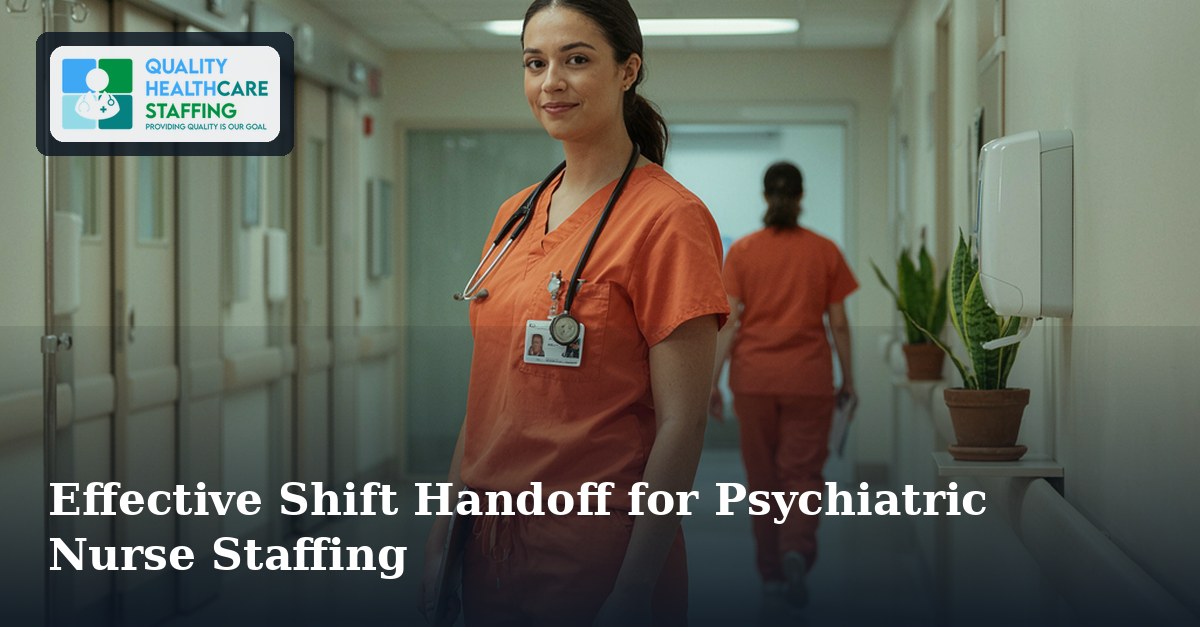
A smooth shift handoff is crucial for maintaining the quality of care in psychiatric units. This guide will help facilities and agencies ensure a seamless transition between shifts, while also providing nurses and healthcare professionals with key tips to deliver effective handoff reports.
A thorough shift handoff report should cover the current status of all patients, any changes in their conditions, ongoing treatments, and any specific instructions from the supervising physician. This ensures that the incoming nurse is fully prepared to provide the necessary care. For facilities and agencies, it’s important to have a standardized handoff procedure that all staff members follow to maintain consistency and reduce the risk of errors.
Imagine a psychiatric unit where the outgoing nurse notes that a patient has become increasingly agitated throughout the day, requiring increased monitoring. The handoff report should detail the patient’s current emotional state, any interventions that were attempted, and the recommended approach for the incoming nurse. This level of detail helps ensure that the incoming nurse understands the patient’s needs and can continue care smoothly.
Effective communication is at the heart of a successful shift handoff. Nurses should clearly and concisely communicate the essential information about each patient. Using a structured format, such as SBAR (Situation, Background, Assessment, Recommendation), can help organize the information and make it easier for the receiving nurse to understand and act upon. For facilities, ensuring that all staff are trained in this technique can enhance the quality of communication and patient care.
Consider a scenario where a patient has been prescribed a new medication. The outgoing nurse uses the SBAR format to communicate that the patient was started on a new antipsychotic (Situation), has a history of adverse reactions to similar medications (Background), is currently experiencing mild drowsiness (Assessment), and recommends monitoring the patient for side effects and adjusting dosages as needed (Recommendation). This structured approach ensures that the incoming nurse has all the necessary information to provide appropriate care.
Accurate and thorough documentation is critical in psychiatric nursing. The handoff report should include detailed notes on patient interactions, medication administration, and any behavioral changes. Facilities should have a system in place for timely and accurate documentation, which can be reviewed and signed off by both the outgoing and incoming nurses. This not only ensures continuity of care but also provides a legal record of the care provided.
Let’s say a patient has been experiencing a significant increase in anxiety. The outgoing nurse documents this, noting the time of onset, any interventions provided, and the patient’s response to these interventions. This documentation is reviewed by the incoming nurse, who can then continue the care plan or adjust it based on the patient’s current state. This practice ensures that there is a clear record of the care provided and helps in maintaining consistency and quality of care.
Training all staff in the specific handoff procedures and communication techniques is vital to ensure consistency and effectiveness. Facilities should provide regular training sessions to reinforce best practices and address any issues that may arise. Additionally, having a standardized handoff template can help ensure that all critical information is covered consistently.
A facility might organize quarterly training sessions for all psychiatric nurses on best practices for shift handoffs. These sessions could include role-playing exercises where nurses practice giving and receiving handoff reports using the SBAR format. This hands-on training ensures that all staff are comfortable and proficient in the handoff process.
A psychiatric shift handoff report should include the patient’s current status, recent changes in condition, ongoing treatments, medication administration, and any relevant behavioral changes. It should also include specific instructions from the supervising physician.
Facilities can ensure consistent handoff reporting by implementing a standardized procedure that all staff members follow. Training staff in a structured communication technique like SBAR can also enhance the quality and consistency of the handoff report.
Documentation plays a crucial role in ensuring that all necessary information is captured and passed on during a shift handoff. It helps maintain continuity of care and provides a legal record of the care provided.
Facilities can improve handoff efficiency by implementing technology solutions such as electronic health records (EHRs) that allow for real-time documentation and access to patient information. Additionally, ensuring that all staff are trained in standardized handoff procedures can streamline the process and reduce errors.
Ensuring a clean and effective shift handoff is vital for the quality of care in psychiatric units. Both facilities and nurses must adhere to standardized procedures, use effective communication techniques, and maintain thorough documentation. If your facility needs psychiatric nurse staffing support, request staff at https://qhstaff.com/contact/.
This article is for informational purposes only and is not medical advice. Please consult a licensed healthcare professional about your specific situation.
Quality Healthcare Staffing connects facilities and healthcare professionals across New York and New Jersey.
Contact Our Team