Posted on: June 27, 2025
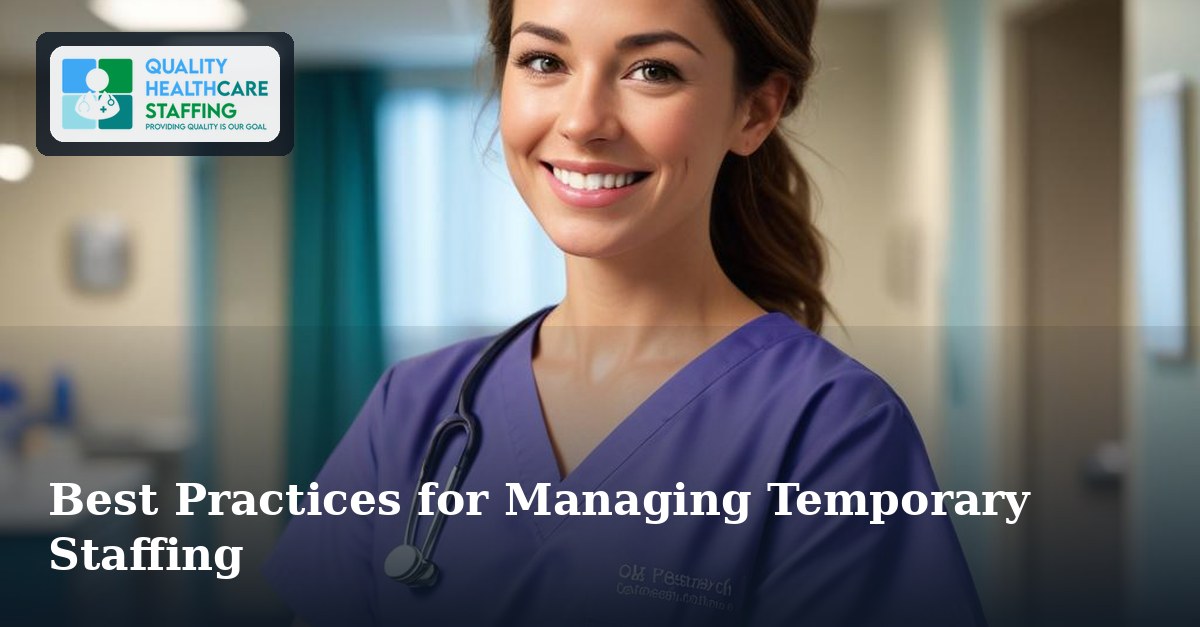
Temporary staffing plays a vital role in today’s healthcare ecosystem. Whether it’s to cover short-term absences, meet seasonal surges, or support large-scale projects, temporary staff can provide essential flexibility without compromising patient care. However, to truly benefit from this workforce, healthcare organizations must have solid strategies in place.
Here are some best practices for effectively managing temporary staffing:
Temporary staff often walk into high-pressure environments with little time for onboarding. Ensure your communication is clear and consistent. Provide written guidelines on:
Facility policies and protocols
Chain of command
Expectations for shifts and documentation
A well-informed temp is an effective temp.
The quality of your temporary workforce starts with the staffing agency you choose. Partner with agencies—like QHS—that:
Conduct thorough credentialing
Provide ongoing training and support
Understand the unique needs of healthcare facilities
Trustworthy agencies offer more than bodies—they provide professionals who are prepared to deliver safe, competent care from day one.
Even though they’re not permanent, temporary staff should never be “thrown in cold.” Create a rapid yet effective orientation that includes:
A tour of the unit
Introduction to key staff
Quick overview of electronic medical records (EMR) systems
The more comfortable your temps feel, the more confident—and safe—they’ll be on the job.
Temporary workers can sometimes feel like outsiders. Promote a culture of inclusion by:
Encouraging full-time staff to welcome and support temps
Acknowledging their contributions during team huddles
Assigning a peer mentor or point person
This not only improves morale but also enhances collaboration and patient outcomes.
Consistent evaluation is key to maintaining high standards. Provide constructive feedback and request input from both temps and permanent staff. Questions to consider:
Did the temp meet the expectations of the role?
Was there any communication breakdown?
Would you request this individual again?
Continuous feedback helps refine your process and strengthens your future staffing decisions.
While emergencies can’t be predicted, patterns can. Use data to anticipate staffing shortages (e.g., flu season, holidays, large events) and plan your temporary staffing needs in advance.
This not only reduces last-minute scrambles but also ensures better matches and continuity of care.
Invest in platforms that allow for real-time communication, credential tracking, and scheduling transparency. This streamlines administrative tasks and helps your team stay connected and compliant.
Conclusion
Temporary staffing is more than just filling a gap—it’s about maintaining the highest standards of care, even in times of transition. By adopting these best practices, healthcare facilities can ensure their temporary workforce is integrated, efficient, and fully equipped to contribute to quality patient outcomes.
At QHS, we understand that people are the heart of healthcare. That’s why we’re committed to providing exceptional temporary staff who are not just qualified, but truly dedicated.
Looking for temporary staffing solutions?
Quality Healthcare Staffing connects facilities and healthcare professionals across New York and New Jersey.
Contact Our Team