Posted on: July 26, 2026
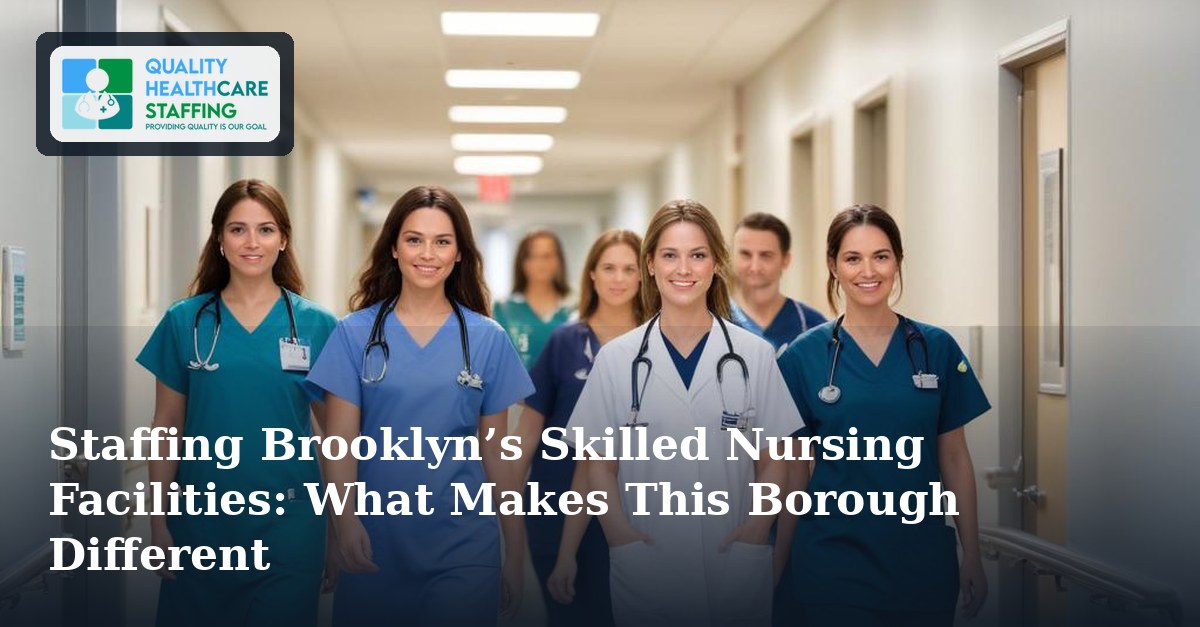
Brooklyn is not a single healthcare market — it’s a collection of very different neighborhoods, each with its own patient population, transit access, and competitive landscape for nursing talent. A facility in Brownsville is competing for staff under different conditions than one in Bay Ridge, even though both are technically “Brooklyn facilities.” Understanding that difference matters more than most facility leaders realize when they’re building a staffing strategy.
Brooklyn has one of the highest concentrations of skilled nursing and long-term care facilities of any borough in the region. That density means nursing talent has genuine choice — a CNA or LPN unhappy with scheduling, culture, or commute at one facility can often find a comparable opening within a short subway ride. That’s good for candidates and a real challenge for facilities that don’t actively work to be a place people want to stay.
The upside of that same density is a deep, if competitive, talent pool. Brooklyn’s healthcare workforce includes graduates from multiple nursing programs across the borough and citywide, plus a large population of experienced clinicians who specifically prefer to work close to home rather than commute into Manhattan. Facilities that position themselves well — manageable commutes, predictable scheduling, real support — can draw from that pool consistently.
Brooklyn’s resident population is remarkably diverse, and that diversity has real staffing implications. Facilities serving neighborhoods with large Caribbean, Russian, Chinese, Orthodox Jewish, or Latino communities benefit meaningfully from staff who share language and cultural fluency with residents — not as a nice-to-have, but as something that affects care quality, family communication, and resident comfort during difficult transitions. Staffing partners with deep Brooklyn placement experience typically maintain networks that reflect this diversity, which matters when matching candidates to your specific resident population.
A facility near multiple subway lines has a fundamentally different applicant pool than one that’s a longer walk from transit, even if both are technically in Brooklyn. When facilities post open shifts, being explicit about transit access and, where relevant, parking availability helps attract candidates who might otherwise assume the commute isn’t workable. This is a small detail that staffing coordinators sometimes overlook, but it affects fill rates on short-notice shifts more than people expect.
Facility leaders in Brooklyn get the best results when they treat their staffing plan as neighborhood-specific rather than borough-generic:
Because Brooklyn nurses genuinely have alternatives nearby, the facilities that retain staff longest tend to be the ones that treat their nursing team as partners rather than interchangeable coverage. That means asking staff directly what would make their specific commute, shift pattern, or unit assignment work better, and actually acting on the answers rather than treating the conversation as a formality. It also means giving per diem and contract staff a reason to come back to the same unit repeatedly, since familiarity benefits both the resident and the facility’s own onboarding burden.
Brooklyn’s staffing market rewards facilities that understand its texture rather than treating it as one undifferentiated borough. QH Staffing has placed nurses, CNAs, and allied health professionals across Brooklyn’s neighborhoods and understands how each pocket of the borough differs. Reach out through our Brooklyn staffing page or call (914) 292-9412 to talk about coverage for your facility.
Book a meeting with our team — pick a time that works for you.
Quality Healthcare Staffing connects facilities and healthcare professionals across New York and New Jersey.
Contact Our Team