Posted on: August 5, 2026
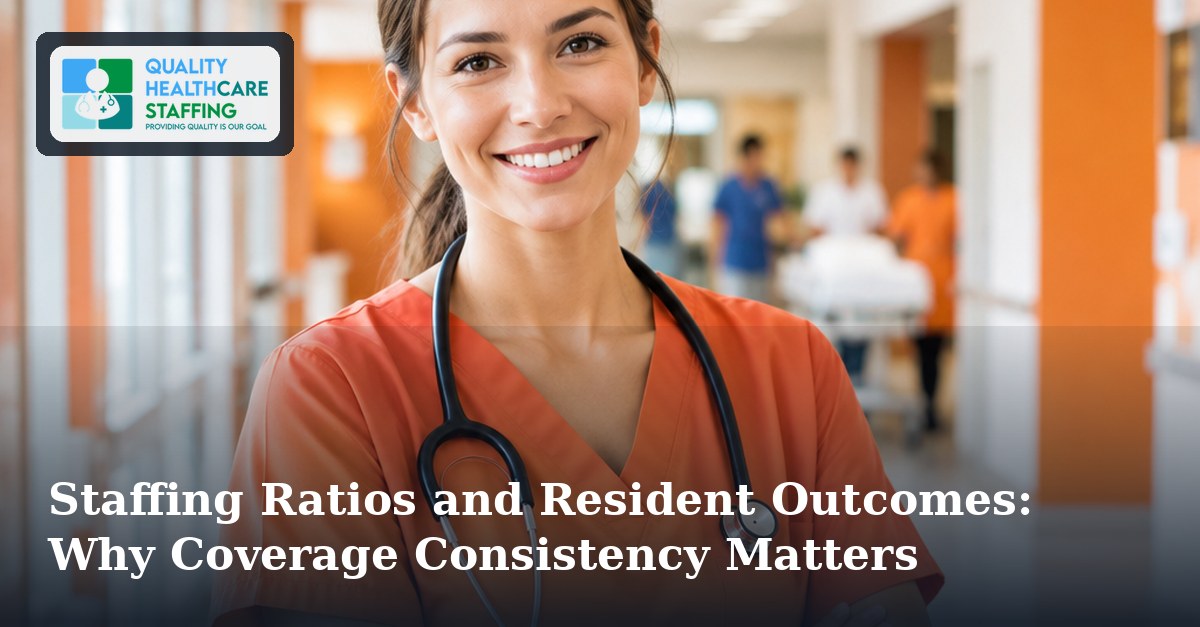
Staffing ratios get most of the regulatory and public attention, and for good reason — having enough qualified staff on the floor is a baseline requirement for safe care. But ratios alone don’t tell the full story of what actually drives resident outcomes. A facility can technically meet its ratio requirements every shift and still see worse outcomes than a comparable facility, if the staff filling those ratios are constantly rotating and unfamiliar with the residents they’re caring for.
A nurse or CNA who has cared for the same resident repeatedly develops a working knowledge of that resident’s baseline — how they normally present, what their typical appetite and mood look like, subtle signs that something is off before it becomes an acute problem. That baseline knowledge is genuinely protective. It’s how early signs of infection, adverse reactions, or cognitive changes get caught before they escalate.
A rotating cast of unfamiliar staff, even if fully qualified and meeting every ratio requirement on paper, loses that baseline knowledge shift to shift. Each new staff member has to essentially re-learn the resident from scratch, which means subtle changes are more likely to be missed simply because there’s no established “normal” to compare against.
Consistency also affects less clinical, but still important, dimensions of care — trust, communication, and resident comfort. Residents, especially those with cognitive impairment, often respond better to familiar faces and voices. Family members build relationships with consistent staff that make difficult conversations about a loved one’s condition easier to have. New staff, however competent, start every interaction from zero in a way that familiar staff don’t.
This compounds over time. A facility with high staff turnover or heavy reliance on unfamiliar last-minute coverage isn’t just dealing with a staffing inconvenience — it’s operating with a genuine information gap about its own residents that affects care quality in ways that are hard to capture in a simple ratio number.
Meeting ratio requirements and building consistency aren’t mutually exclusive, but they require deliberate planning rather than defaulting to whoever’s available for each shift:
Ratio compliance is necessary, but it’s a floor, not a ceiling. Facilities that build genuine staffing consistency on top of ratio compliance tend to see fewer missed early warning signs, stronger family trust, and a more stable core team overall — all of which reinforce each other over time.
It’s worth reviewing your own staffing data with this distinction in mind: not just whether shifts were covered, but how often they were covered by someone who had actually cared for those specific residents before. That single data point often explains more about care quality trends than ratio numbers alone.
QH Staffing works with facilities to build coverage plans that prioritize consistency, sending qualified staff back to the same units and residents rather than treating every shift as an isolated placement. Reach out through our SNF staffing page or call (914) 292-9412 to talk about building a more consistent coverage plan.
Book a meeting with our team — pick a time that works for you.
Quality Healthcare Staffing connects facilities and healthcare professionals across New York and New Jersey.
Contact Our Team