Blog Archives - QHStaff

Efficient Onboarding for Per Diem Nursing Jobs in New Jersey

Onboarding temporary staff can be a daunting task, especially in the fast-paced environment of healthcare. Facilities and agencies in New Jersey need to ensure that temporary staff are ready to provide high-quality care immediately, while candidates seek seamless and efficient integration into new roles. This article provides practical insights for both sides, ensuring that per diem nursing jobs can be filled quickly and effectively without sacrificing quality.

Pre-Assignment Preparation: A Crucial Step

Facilities and agencies can streamline the onboarding process by preparing in advance. This includes having all necessary documents and orientation materials ready before the nurse arrives. For example, consider having a comprehensive guide to the facility’s policies and procedures, as well as a detailed overview of the medical staffing environment. This proactive step can significantly reduce delays and ensure a smooth transition into the new role.

In New Jersey, where the demand for psychiatric nurse staffing is high, it’s essential to have a well-structured onboarding process in place. This can include having a dedicated team to handle the onboarding process, as well as providing regular training and support to temporary staff. By doing so, facilities can ensure that temporary staff are well-prepared to handle the unique challenges of psychiatric care.

Practical Example

A facility in New Jersey may prepare a comprehensive orientation package that includes a detailed facility map, emergency procedures, and a list of key personnel and their contact information. This package can be sent to the temporary staff member before their first day, allowing them to familiarize themselves with the facility and its operations. Additionally, the facility can provide an overview of the patient population and any specific needs or challenges that the temporary staff should be aware of.

Leveraging Technology for Efficiency

Leveraging technology can greatly enhance the onboarding experience. Digital orientation platforms allow for remote access to training materials and can enable candidates to familiarize themselves with the facility’s procedures before their first shift. For instance, facilities can use online learning management systems to provide temporary staff with training modules, video tutorials, and interactive quizzes. This can help reduce the time spent on onboarding and ensure that temporary staff are well-prepared for their roles.

In New Jersey, where medical staffing is highly regulated, it’s essential to use technology that complies with state regulations. This can include using digital platforms that are HIPAA-compliant and have secure access controls. By doing so, facilities can ensure that sensitive patient information is protected and that temporary staff have access to the resources they need.

Practical Example

A facility might use a learning management system (LMS) to provide temporary nurses with online training modules on patient care, infection control, and facility-specific policies. These modules can be completed remotely, allowing temporary staff to get up to speed on the facility’s procedures before they arrive on-site. The LMS can also track their progress and provide certificates of completion, which can be useful for compliance and record-keeping purposes.

Establishing Clear Communication Channels

Clear communication is key to a successful onboarding process. Establishing dedicated communication channels, such as email groups or messaging platforms, can ensure that all temporary staff have access to the information they need. Regular check-ins and feedback sessions can help address any issues or questions that arise, fostering a supportive and inclusive environment. For candidates, being proactive in communication and asking for clarification when needed can help ease the transition into a new role.

In New Jersey, where the healthcare industry is highly competitive, it’s essential to have a strong communication strategy in place. This can include having a dedicated onboarding coordinator who can provide regular updates and support to temporary staff. By doing so, facilities can ensure that temporary staff feel supported and valued, which can lead to improved job satisfaction and reduced turnover rates.

Practical Example

A facility might set up a dedicated Slack channel for temporary staff, where they can ask questions, receive updates, and communicate with other team members. The onboarding coordinator can be available on this channel to provide real-time support and answer any questions that arise. Additionally, the facility can schedule regular one-on-one check-ins with temporary staff to ensure they are comfortable with their roles and have access to the resources they need.

Leveraging Peer Support and Mentorship

Another effective way to streamline the onboarding process is to leverage peer support and mentorship programs. Pairing temporary staff with experienced nurses can provide them with practical guidance and support, helping them to navigate the facility’s unique environment and patient care practices. Mentors can offer advice, answer questions, and provide feedback, ensuring that temporary staff feel confident and supported in their new roles.

In New Jersey, where the demand for psychiatric nurse staffing is high, mentorship programs can be particularly beneficial. Experienced psychiatric nurses can provide valuable insights into the unique challenges and requirements of psychiatric care, helping temporary staff to quickly adapt to the demands of the role.

Practical Example

A facility might implement a mentorship program where each temporary nurse is paired with an experienced psychiatric nurse. The mentor can provide one-on-one support, offering guidance on patient care practices, facility-specific protocols, and any other challenges that may arise. Regular check-ins and feedback sessions can help ensure that the temporary nurse is receiving the support they need to succeed in their role.

Frequently Asked Questions

What are some technological tools that can facilitate efficient onboarding?

Digital orientation platforms, remote access to training materials, and real-time communication tools are all effective technological tools that can streamline the onboarding process. These tools allow for remote preparation and ongoing support, making the transition smoother for both facilities and candidates.

How can facilities ensure that temporary staff are prepared for specific roles?

Facilities can prepare temporary staff by providing detailed orientation materials, including facility-specific policies, training modules, and an overview of the medical staffing environment. This preparation ensures that temporary staff are well-informed and ready to provide high-quality care from day one.

What are some strategies for improving communication during the onboarding process?

Establishing clear communication channels, such as dedicated email groups or messaging platforms, can ensure that all temporary staff have access to the information they need. Regular check-ins and feedback sessions can also help address any issues or questions that arise, fostering a supportive environment.

How can mentorship programs benefit temporary staff in psychiatric care roles?

Mentorship programs can provide valuable support and guidance to temporary staff in psychiatric care roles. Experienced psychiatric nurses can offer insights into patient care practices, facility-specific protocols, and any other challenges that may arise, helping temporary staff to quickly adapt to the demands of the role.

Conclusion

Streamlining the onboarding process for temporary staff is crucial for maintaining high-quality care and ensuring a positive experience for both facilities and candidates. By leveraging technology, preparing in advance, establishing clear communication channels, and implementing mentorship programs, facilities can effectively onboard temporary staff without compromising quality. For those seeking per diem nursing jobs in New Jersey, being proactive and prepared can make the transition smoother. Ready to request staff for your facility? Connect with us at https://qhstaff.com/contact/.
Working in Behavioral Health: What New CNAs and Nurses Need to Know

Behavioral health units play a critical role in providing care for individuals with mental health conditions and psychiatric disorders. Whether you’re a new CNA or nurse, working in these units can be both rewarding and challenging. This guide provides essential information to help you prepare for your first shift in a behavioral health setting.

Understanding the Role of CNAs and Nurses in Behavioral Health Units

In behavioral health units, CNAs and nurses play pivotal roles in ensuring patients’ physical and emotional well-being. CNAs assist with daily living activities such as bathing, dressing, and meal preparation, while also monitoring patient behavior and reporting any changes to the nursing staff. Nurses provide medical care, coordinate with mental health professionals, and manage medication administration and monitoring.

For example, a CNA might notice a patient showing signs of agitation and immediately inform the nurse, who can then intervene with appropriate measures such as medication or de-escalation techniques. This collaboration ensures that patients receive comprehensive care that addresses both their physical and mental health needs.

Essential Skills and Knowledge for New Staff

New staff in behavioral health units should be equipped with skills such as de-escalation techniques, crisis intervention, and basic psychopharmacology. Understanding the signs and symptoms of common mental health disorders is crucial. Training in these areas helps staff provide compassionate and effective care.

For instance, a nurse might use de-escalation techniques to calm a patient experiencing a panic attack. This could involve using a calm and reassuring tone, providing a quiet space, and offering reassurance. By mastering these skills, nurses and CNAs can effectively manage challenging situations and ensure a safe environment for all.

Support Systems and Resources

Behavioral health units often have robust support systems, including social workers, psychiatrists, and counselors. These professionals work together to create individualized care plans and provide a supportive environment for both patients and staff. Staff should feel comfortable reaching out to these resources when needed.

For example, if a CNA is unsure about the best way to handle a patient’s sudden change in behavior, they can consult with a social worker or psychiatrist for guidance. This multidisciplinary approach ensures that patients receive comprehensive care and helps staff manage the complexities of the job.

Safety Protocols and Emergency Procedures

Safety is a critical component of working in a behavioral health unit. Staff must be familiar with emergency procedures such as restraint techniques, seclusion protocols, and how to handle violent or aggressive behavior. Training in these areas helps ensure the safety of both patients and staff.

For example, if a patient becomes violent, staff must know how to safely and effectively implement a restraint protocol to prevent harm. This involves a thorough understanding of the proper techniques and the legal and ethical considerations surrounding the use of restraints.

Professional Development and Continuous Learning

Ongoing education and training are essential for staff working in behavioral health units. Regular workshops, seminars, and continuing education courses can help staff stay up-to-date with the latest practices and treatments in mental health care. Facilities should encourage and support staff in pursuing these opportunities.

For example, a facility might offer a monthly training session on the latest psychopharmacology research or a workshop on trauma-informed care. By investing in the professional development of their staff, facilities can ensure that they provide the highest quality care possible.

Frequently Asked Questions

What are the key challenges in working in behavioral health units?

The key challenges include managing patients with unpredictable behaviors, dealing with high-stress situations, and ensuring the safety of both patients and staff. Effective training and support systems can help mitigate these challenges.

How can I prepare for my first shift in a behavioral health unit?

Preparing for your first shift involves familiarizing yourself with the unit’s protocols, understanding the signs and symptoms of common mental health conditions, and learning de-escalation techniques. Additionally, attending orientation sessions and asking questions can help you feel more confident.

What resources are available for staff working in behavioral health units?

Behavioral health units typically offer ongoing training, support from mental health professionals, and access to counseling services for staff. These resources help ensure that staff members can provide high-quality care while maintaining their own well-being.

What are the common mental health disorders that staff should be familiar with?

Common mental health disorders include depression, anxiety, bipolar disorder, schizophrenia, and personality disorders. Understanding the signs and symptoms of these conditions is essential for providing appropriate care and support to patients.

How do staff handle emergency situations in behavioral health units?

Handling emergency situations requires a clear understanding of safety protocols and emergency procedures. Staff must be trained in techniques such as restraint and seclusion, and should have access to a multidisciplinary team to support them in managing crises.

Conclusion

Working in a behavioral health unit is a unique and rewarding experience. By understanding the roles, skills, and support systems in place, new CNAs and nurses can be better prepared for their first shift. If you’re interested in joining a dynamic and supportive team in behavioral health, apply today — https://qhstaff.com/careers/.

This article is for informational purposes only and is not medical advice. Please consult a licensed healthcare professional about your specific situation.

Effective Shift Handoff for Psychiatric Nurse Staffing

A smooth shift handoff is crucial for maintaining the quality of care in psychiatric units. This guide will help facilities and agencies ensure a seamless transition between shifts, while also providing nurses and healthcare professionals with key tips to deliver effective handoff reports.

Key Components of a Successful Shift Handoff

A thorough shift handoff report should cover the current status of all patients, any changes in their conditions, ongoing treatments, and any specific instructions from the supervising physician. This ensures that the incoming nurse is fully prepared to provide the necessary care. For facilities and agencies, it’s important to have a standardized handoff procedure that all staff members follow to maintain consistency and reduce the risk of errors.

Practical Example:

Imagine a psychiatric unit where the outgoing nurse notes that a patient has become increasingly agitated throughout the day, requiring increased monitoring. The handoff report should detail the patient’s current emotional state, any interventions that were attempted, and the recommended approach for the incoming nurse. This level of detail helps ensure that the incoming nurse understands the patient’s needs and can continue care smoothly.

Communication Techniques for Effective Handoffs

Effective communication is at the heart of a successful shift handoff. Nurses should clearly and concisely communicate the essential information about each patient. Using a structured format, such as SBAR (Situation, Background, Assessment, Recommendation), can help organize the information and make it easier for the receiving nurse to understand and act upon. For facilities, ensuring that all staff are trained in this technique can enhance the quality of communication and patient care.

Practical Example:

Consider a scenario where a patient has been prescribed a new medication. The outgoing nurse uses the SBAR format to communicate that the patient was started on a new antipsychotic (Situation), has a history of adverse reactions to similar medications (Background), is currently experiencing mild drowsiness (Assessment), and recommends monitoring the patient for side effects and adjusting dosages as needed (Recommendation). This structured approach ensures that the incoming nurse has all the necessary information to provide appropriate care.

Documentation and Record Keeping

Accurate and thorough documentation is critical in psychiatric nursing. The handoff report should include detailed notes on patient interactions, medication administration, and any behavioral changes. Facilities should have a system in place for timely and accurate documentation, which can be reviewed and signed off by both the outgoing and incoming nurses. This not only ensures continuity of care but also provides a legal record of the care provided.

Practical Example:

Let’s say a patient has been experiencing a significant increase in anxiety. The outgoing nurse documents this, noting the time of onset, any interventions provided, and the patient’s response to these interventions. This documentation is reviewed by the incoming nurse, who can then continue the care plan or adjust it based on the patient’s current state. This practice ensures that there is a clear record of the care provided and helps in maintaining consistency and quality of care.

Training and Standardization

Training all staff in the specific handoff procedures and communication techniques is vital to ensure consistency and effectiveness. Facilities should provide regular training sessions to reinforce best practices and address any issues that may arise. Additionally, having a standardized handoff template can help ensure that all critical information is covered consistently.

Practical Example:

A facility might organize quarterly training sessions for all psychiatric nurses on best practices for shift handoffs. These sessions could include role-playing exercises where nurses practice giving and receiving handoff reports using the SBAR format. This hands-on training ensures that all staff are comfortable and proficient in the handoff process.

Frequently Asked Questions

What should be included in a psychiatric shift handoff report?

A psychiatric shift handoff report should include the patient’s current status, recent changes in condition, ongoing treatments, medication administration, and any relevant behavioral changes. It should also include specific instructions from the supervising physician.

How can facilities ensure consistent handoff reporting?

Facilities can ensure consistent handoff reporting by implementing a standardized procedure that all staff members follow. Training staff in a structured communication technique like SBAR can also enhance the quality and consistency of the handoff report.

What role does documentation play in shift handoffs?

Documentation plays a crucial role in ensuring that all necessary information is captured and passed on during a shift handoff. It helps maintain continuity of care and provides a legal record of the care provided.

How can a facility improve handoff efficiency?

Facilities can improve handoff efficiency by implementing technology solutions such as electronic health records (EHRs) that allow for real-time documentation and access to patient information. Additionally, ensuring that all staff are trained in standardized handoff procedures can streamline the process and reduce errors.

Conclusion

Ensuring a clean and effective shift handoff is vital for the quality of care in psychiatric units. Both facilities and nurses must adhere to standardized procedures, use effective communication techniques, and maintain thorough documentation. If your facility needs psychiatric nurse staffing support, request staff at https://qhstaff.com/contact/.

This article is for informational purposes only and is not medical advice. Please consult a licensed healthcare professional about your specific situation.

Acing Your First 30 Days: Impress and Earn Repeat Assignments

Your first 30 days in a new healthcare role are crucial for making a strong impression and securing future assignments. Whether you’re a nurse or a facility manager, this guide offers practical advice to ensure you stand out and earn repeat requests. This is particularly important in the competitive healthcare staffing markets of New Jersey and New York.

Establishing a Solid Foundation

From day one, it’s essential to demonstrate your commitment to quality care and professionalism. For healthcare professionals, this means arriving prepared, wearing the appropriate attire, and showing respect to both colleagues and patients. Facilities should provide a clear onboarding process and make new hires feel welcome, which can set the tone for a positive working relationship.

Practical Example:
A nurse starting a new position at a hospital in New Jersey should ensure they are familiar with the hospital’s policies and dress code. Arriving early on the first day, in the proper attire, and ready to engage with the staff can make a significant first impression.

Communication Is Key

Effective communication is vital in healthcare settings. For professionals, this involves clear, concise, and compassionate communication with patients and colleagues. Facilities should ensure that all staff members are well-informed about policies, procedures, and patient care plans. A strong communication framework will help prevent misunderstandings and ensure smooth operations.

Practical Example:
A new nurse at a long-term care facility in New York should take the initiative to introduce themselves to the team and ask about any specific communication protocols. Regularly checking in with the charge nurse and documenting all patient interactions clearly can help maintain open and effective communication.

Exceed Expectations

One of the best ways to make a lasting impression is to exceed the expectations set for your role. For healthcare professionals, this means going above and beyond in patient care, documentation, and teamwork. Facilities should recognize and reward staff who consistently demonstrate exceptional performance, which can motivate others to do the same.

Practical Example:
A nurse working in a home health agency in New Jersey can exceed expectations by consistently providing compassionate care, ensuring thorough documentation, and actively participating in team meetings. Going the extra mile by following up on patient needs and addressing them promptly can lead to positive feedback and repeat assignments.

Continuous Learning and Improvement

Continuing education and professional development are essential in healthcare. For healthcare professionals, staying updated on the latest practices and technologies can enhance your skills and make you a valuable asset. Facilities should encourage ongoing learning and provide opportunities for staff to attend workshops, seminars, and other educational events.

Practical Example:
A healthcare professional working in a facility in New York can stay ahead by attending regular training sessions and workshops offered by their healthcare staffing agency. This not only helps in keeping skills current but also demonstrates a commitment to continuous improvement, which can be recognized by both the facility and the agency.

Embrace Teamwork

Healthcare is a team effort, and demonstrating strong teamwork skills can significantly impact your first 30 days. For healthcare professionals, this means being a supportive and collaborative team member. Facilities should foster a culture of teamwork and provide resources for team-building activities and collaboration.

Practical Example:
A nurse at a nursing home in New Jersey can show their commitment to teamwork by actively participating in team meetings and offering support to colleagues when needed. Engaging in team-building activities and collaborating effectively with other staff members can help create a positive and cohesive work environment.

Frequently Asked Questions

How can I ensure I make a strong first impression?

Arrive on time, be prepared, and show professionalism in your interactions with colleagues and patients. Demonstrating a strong work ethic and a commitment to quality care will help you stand out.

What should facilities do to support new hires?

Facilities should provide a clear onboarding process, ensure communication is open and effective, and offer resources for ongoing learning and development. Recognizing and rewarding exceptional performance can also help build a positive working relationship.

How can I stay motivated during my first 30 days?

Set clear goals for yourself and focus on continuous learning and improvement. Engage with your colleagues, seek feedback, and embrace teamwork to stay motivated and engaged.

What are some ways to stay updated on the latest healthcare practices?

Attending workshops, seminars, and training sessions can help you stay updated on the latest healthcare practices and technologies. Your healthcare staffing agency can provide opportunities for continuing education and professional development.

By following these tips, you can make a strong impression and set the stage for future opportunities. Whether you’re a healthcare professional or a facility manager, focusing on these key areas can help you secure repeat assignments and build a successful career in healthcare.

Apply today — https://qhstaff.com/careers/.

Negotiating Your Schedule: Tips for Per Diem Nurses

Balancing the flexibility of per diem nursing with the needs of your employer can be challenging. Whether you’re a psychiatric nurse looking for staffing opportunities or a healthcare professional in New Jersey, knowing how to communicate about your schedule is crucial. This guide offers practical advice to help you maintain a productive relationship with your supervisor while securing the shifts that work best for you.

Understanding Your Supervisor’s Perspective

When discussing your schedule, it’s important to understand the pressures your supervisor faces. For facilities and agencies, managing staffing levels to meet the needs of patients is a daily challenge. A clear understanding of these constraints can help you frame your requests more effectively. For example, if you’re asking for specific shifts, be prepared to explain how your availability aligns with the facility’s needs. Suppose you’re a psychiatric nurse who is available only on weekends. In this case, you can emphasize how your availability can help cover shifts that are traditionally more challenging to fill.

Communicating Your Availability

Effective communication is key when negotiating your schedule. Start by clearly outlining your availability and any limitations you have. Be upfront about your preferred shifts, including any days you can work or times you’re unavailable. This transparency allows your supervisor to make informed decisions and helps prevent misunderstandings. For instance, if you’re only available on weekends, communicate this early and often to ensure you’re scheduled accordingly. You might also suggest a regular schedule that you can consistently maintain, such as working every Saturday and Sunday, which can help your supervisor plan ahead.

Proposing Solutions

Instead of simply stating your needs, propose solutions that can benefit both you and the facility. If you know you need time off for a personal event, suggest a temporary replacement or offer to cover another shift later. This proactive approach can make your requests more appealing to your supervisor and shows your commitment to the team’s success. For example, if you need time off during the holidays, you could offer to work extra shifts leading up to or right after the holiday period to cover for others.

Maintaining Professionalism

Throughout your discussions, it’s important to maintain a professional and respectful tone. Avoid making demands and instead focus on finding a mutually beneficial arrangement. If your supervisor is unable to accommodate your requests, try to understand the reasons behind the decision and explore alternative solutions. For example, if you need more shifts, suggest being available for short-notice or last-minute assignments. This can show your willingness to adapt and contribute to the facility’s staffing needs.

Frequently Asked Questions

How can I ensure my requests are taken seriously?

Be prepared and organized. Have a clear list of your availability and any special requests. Present your case professionally and be ready to discuss how your needs align with the facility’s goals. For instance, if you have a medical appointment that requires you to be off a specific day, explain the importance of the appointment and how you can make alternative arrangements to ensure coverage.

What should I do if my supervisor is inflexible?

If your supervisor is unable to accommodate your requests, ask for specific reasons and look for alternative solutions. Consider temporary arrangements or adjustments that can be phased in over time. For example, if you need more shifts, you could suggest a trial period where you work additional shifts to gauge how well it works for both parties.

Can I negotiate for specific shifts?

Yes, but it’s important to be flexible and consider the facility’s needs. Propose a schedule that works for both parties and be open to compromise. For example, if you prefer working evenings, suggest a mix of evening and day shifts to show your willingness to be flexible.

How do I handle a situation where my needs conflict with the facility’s needs?

When your needs conflict with the facility’s needs, it’s important to communicate openly and find a middle ground. For instance, if the facility needs you to work on a particular day that you’re unavailable, suggest alternative solutions such as finding a temporary replacement or offering to work an equivalent shift another time.

Conclusion

Negotiating your schedule in per diem nursing jobs requires clear communication, understanding, and a willingness to find solutions that benefit both you and your employer. By approaching these conversations with professionalism and flexibility, you can maintain a positive relationship while securing the shifts that work best for you. For facilities and agencies needing staff, request assistance at https://qhstaff.com/contact/.

Navigating the Conversation: Discussing Your Schedule with a Supervisor

Balancing work and personal life is a critical skill for any healthcare professional. Whether you’re a psychiatric nurse or a per diem staff member, discussing your schedule with your supervisor requires a careful approach to ensure both parties are satisfied. This guide provides strategies to help you manage this conversation effectively, ensuring that you can continue to provide excellent care while maintaining a healthy work-life balance.

Understanding Your Needs and Goals

Before approaching your supervisor, it’s essential to have a clear understanding of your own needs and goals. Whether you’re looking to reduce your hours, change your shifts, or take time off, be specific about what you’re seeking. This clarity will help you communicate more effectively and make it easier for your supervisor to find a solution that works for both of you.

Practical Example:
Imagine you are a per diem nurse and you have been asked to take on more shifts. However, you are feeling overwhelmed and need to reduce your hours. Before the meeting, list the reasons why you need to cut down on shifts, such as family obligations, additional training, or personal health concerns.

Timing and Approach

Choosing the right time to have this conversation is crucial. Avoid bringing up the topic during a busy period or when your supervisor is under significant stress. Instead, schedule a meeting at a time when both of you can focus on the discussion without interruptions. Approach the conversation with a positive attitude and a willingness to find a compromise.

Practical Example:
If you are a psychiatric nurse who needs to discuss a change in your schedule, choose a time when your supervisor is not dealing with an emergency. For instance, you might schedule the meeting on a Tuesday afternoon, a day when the facility is less busy and your supervisor is more likely to be available.

Communicating Effectively

When discussing your schedule with your supervisor, be clear and concise about your needs. Use specific examples to illustrate how the current schedule is impacting your ability to provide quality care or your personal life. For instance, if you’re a psychiatric nurse, you might mention how a recent schedule change has affected your ability to manage patient caseloads effectively. Highlight the importance of maintaining a balance that allows you to perform your duties to the best of your ability.

Practical Example:
You might say, “I’ve noticed that with the current schedule, I’m often working late and not getting enough time to prepare for the next day. This has affected my ability to provide thorough care to my patients. I would like to discuss the possibility of switching to earlier shifts.”

Maintaining Professionalism and Respect

Regardless of the outcome of the conversation, it’s essential to maintain a professional and respectful demeanor. Acknowledge your supervisor’s constraints and the challenges they face in managing the facility’s staffing needs. Offer suggestions for how you can contribute to finding a solution, such as being flexible with certain shifts or taking on additional responsibilities during a transition period.

Practical Example:
If your supervisor is unable to immediately accommodate your request, you could say, “I understand that you may not be able to change my schedule right away. In the meantime, I’m willing to work some evening shifts to help cover the gaps until we can find a long-term solution.”

Frequently Asked Questions

How can I prepare for a conversation with my supervisor about my schedule?

Before the meeting, write down your specific needs and goals. Think about potential solutions that could work for both you and the facility. Be ready to discuss your strengths and how you can continue to provide excellent care while making necessary adjustments.

Practical Example:
Prepare a list of your needs, such as “I need to reduce my hours by 20%,” and potential solutions, such as “I can switch to daytime shifts.” Bring this list to your meeting to ensure you cover all points.

What if my supervisor is unable to accommodate my schedule changes?

If your supervisor cannot meet your initial requests, be open to alternative solutions. Consider whether there are other areas of flexibility, such as adjusting the timing of your shifts or taking on different responsibilities. Discussing potential compromises can help you reach a mutually beneficial arrangement.

Practical Example:
If your supervisor cannot reduce your hours, you might suggest, “Can we discuss moving my shifts to different days of the week? I could work Mondays and Tuesdays instead of Thursdays and Fridays.”

What if the conversation doesn’t go as planned?

If the conversation does not go as expected, take the time to reflect on the discussion and consider what you can learn from it. Maintain a professional attitude and express your willingness to work together to find a solution in the future. If necessary, revisit the conversation after some time has passed.

Practical Example:
If the supervisor is not immediately receptive, you could say, “I understand that this is a challenging time. Can we revisit this discussion in a month to see if there are any changes in our staffing needs?”

How can I ensure that my request is taken seriously?

Approach the conversation with a clear and professional demeanor. Provide specific reasons for your request and be prepared to offer solutions that can benefit both parties. Demonstrating your commitment to the facility and your willingness to collaborate can help your request be taken seriously.

Practical Example:
You might start the conversation with, “I appreciate the opportunity to work here and would like to discuss a change in my schedule to better serve our patients. I have some suggestions that I believe can help both of us.”

Conclusion

Discussing your schedule with a supervisor is an important conversation that requires thoughtful preparation and a professional approach. By understanding your needs, choosing the right time to talk, and maintaining a respectful demeanor, you can ensure that the conversation is productive and positive. Whether you’re a psychiatric nurse or a per diem staff member, effective communication is key to maintaining a healthy work-life balance. If you need assistance with staffing, whether for psychiatric nurse staffing or other medical staffing needs in New Jersey, reach out to us at https://qhstaff.com/contact/.
Building a Reliable Float Pool for Small Facilities

Creating a reliable float pool can be a game-changer for small healthcare facilities, ensuring coverage during staff shortages without overburdening permanent staff. This guide provides actionable steps for facilities and insights for nurses and healthcare professionals interested in flexible opportunities.

Why a Float Pool is Essential

A float pool consists of temporary staff ready to fill gaps when regular employees are absent. For small facilities, this can mean the difference between maintaining high-quality patient care and facing operational challenges. For nurses and CNAs, float pool positions offer flexibility and the chance to gain diverse experience. For example, a small nursing home in Brooklyn may need a float pool to cover sudden staff absences due to illness or vacation, ensuring patient care remains uninterrupted.

Steps to Build an Effective Float Pool

1. Recruit a Diverse Pool of Candidates: Start by recruiting a mix of experienced and newer healthcare professionals. This diversity can help cover a range of needs and patient types. For facilities, partnering with a nurse staffing agency NYC can streamline the recruitment process and ensure a steady flow of qualified candidates. For example, a nurse staffing agency can help a small facility in Brooklyn quickly identify and recruit CNAs and per diem nurses who have the necessary experience and certifications.

2. Establish Clear Policies and Protocols: Ensure that float staff are familiar with your facility’s protocols and policies. Regular training sessions and documentation will help them integrate smoothly into their temporary roles. For nurses looking for CNA jobs Brooklyn, understanding these protocols can make you a more attractive candidate for float pool positions. For instance, a facility might conduct quarterly training sessions for its float pool to ensure all temporary staff are up-to-date with the latest procedures.

3. Leverage Technology: Utilize scheduling software and communication tools to manage float pool assignments efficiently. This technology can help both facilities and healthcare professionals stay organized and informed about upcoming shifts. For per diem nursing jobs, having a digital platform can make finding and accepting shifts much easier. For example, a digital platform like ShiftWizard can help a facility in Brooklyn quickly assign shifts and communicate changes to its float pool.

4. Provide Ongoing Support: Regular feedback and support can help float staff feel valued and motivated. Facilities can offer mentorship programs or regular check-ins to address any concerns. For nurses, these opportunities can enhance your skill set and job satisfaction. For instance, a facility might pair each float nurse with a permanent staff member for regular mentorship sessions to ensure they feel supported and integrated into the team.

Benefits for Both Sides

For facilities, a reliable float pool means less stress during unexpected absences and better patient care. For nurses and healthcare professionals, float pool positions offer flexibility, diverse experiences, and the opportunity to work in different settings. For example, a CNA in Brooklyn might find float pool positions appealing because they can work across different healthcare settings, gaining a broader range of experience.

Frequently Asked Questions

How do I join a float pool?

To join a float pool, reach out to healthcare staffing agencies like nurse staffing agency NYC, which can connect you with facilities looking for temporary staff. Additionally, many facilities have their own float pools, so it’s worth inquiring directly with local healthcare providers. For instance, a nurse staffing agency can help you find float pool opportunities by matching your qualifications with the needs of various facilities in the area.

What qualifications are needed for float pool positions?

Typically, float pool positions require relevant certifications such as RN, LPN, or CNA licenses. Experience in healthcare settings is also beneficial. Specific requirements may vary by facility, so it’s important to review each position’s prerequisites. For example, a float pool position at a Brooklyn nursing home might require a current CNA license and at least one year of experience in a similar setting.

How can facilities ensure float staff integrate well?

Facilities can ensure float staff integrate well by providing clear training, regular communication, and ongoing support. Establishing a mentorship program can also help new staff feel more comfortable and supported in their roles. For example, a Brooklyn nursing home might assign each float staff member a permanent mentor to help them navigate the facility’s specific protocols and policies.

How can facilities manage the scheduling of float staff effectively?

Effective scheduling of float staff can be achieved through the use of digital tools and clear communication channels. Facilities can use scheduling software to assign shifts and communicate changes promptly. For example, a Brooklyn nursing home might use a digital platform to manage its float pool, ensuring that shifts are assigned and communicated efficiently.

Conclusion

Building a reliable float pool is a strategic move for small healthcare facilities and a valuable opportunity for nurses and healthcare professionals. By following these steps, you can ensure that your facility maintains quality care and that healthcare professionals have flexible job options. Ready to request staff for your facility? Visit https://qhstaff.com/contact/ to get started.

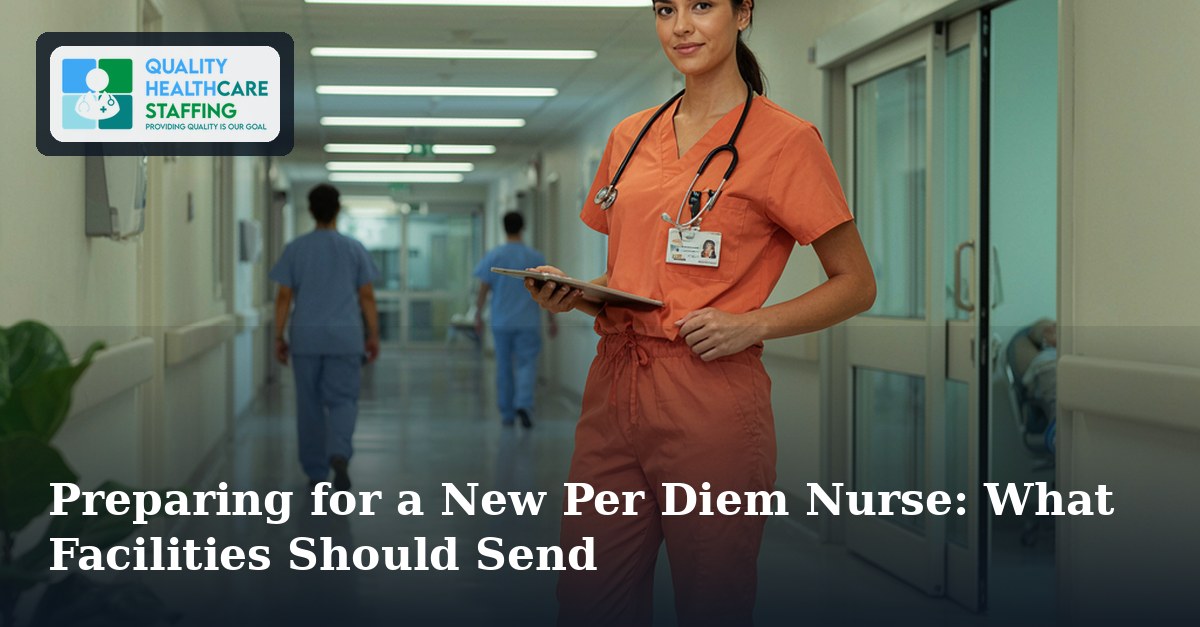
Preparing for a New Per Diem Nurse: What Facilities Should Send

Welcoming a new per diem nurse to your facility is crucial for maintaining high-quality patient care. This guide will provide you with a comprehensive list of items and information that should be sent to a new per diem nurse before their first shift, helping them hit the ground running and easing their transition into your facility.

Essential Documentation

Before the first shift, a new per diem nurse should receive a package of essential documentation. This includes the facility’s patient care policies and procedures, emergency protocols, and any specific guidelines related to the nursing unit they will be working in. Additionally, a brief overview of the electronic health record (EHR) system used at the facility should be included. This documentation will help the nurse understand the expectations and protocols they need to follow.

For example, if the facility uses a specific EHR system, such as Epic or Cerner, the nurse should receive detailed instructions on how to log in, navigate the system, and document patient care effectively. This can be in the form of a quick guide or a video tutorial.

Facility Orientation Materials

To help the per diem nurse get familiar with the facility, it’s important to provide orientation materials. This can include a map of the facility, a list of key personnel and their contact information, and any specific safety and security procedures. A brief introduction to the facility’s culture and mission can also be helpful in making the nurse feel more integrated into the team.

For instance, providing a map with highlighted locations such as the nurse’s station, patient rooms, and break rooms can help the nurse quickly orient themselves. Additionally, a list of key personnel such as the head nurse, security staff, and housekeeping can ensure the nurse knows who to contact for various needs.

Equipment and Supplies

Per diem nurses should be provided with the necessary equipment and supplies for their shift. This can include scrubs, a name badge, and any specialized equipment required for the role. Ensuring that all necessary supplies are readily available helps to reduce any logistical challenges and allows the nurse to focus on providing care.

For example, if the nurse will be working with patients who require specialized equipment, such as ventilators or insulin pumps, the facility should ensure that these items are available and that the nurse has the necessary training materials to operate them effectively.

Communication Plan

A clear communication plan is essential for a smooth transition. This includes providing the nurse with the contact information for their primary supervisor and any other key contacts within the facility. Information on how to report issues, emergencies, or any concerns should also be included. Ensuring open lines of communication can help the nurse feel supported and prepared for any situation.

For instance, the nurse should have access to a direct line to the head nurse, as well as a list of emergency contacts for situations that require immediate attention. This can include a contact list for the security team, housekeeping, and the facility’s medical director.

Frequently Asked Questions

What should I do if I need additional training or support?

If you need additional training or support, reach out to your supervisor or the facility’s training department. They can provide resources or arrange for additional training sessions to help you feel more comfortable and confident in your role. For example, if you need to learn how to use a specific piece of medical equipment, your supervisor can arrange a training session with a more experienced nurse.

How do I access patient records and medical information?

Access to patient records and medical information is typically provided through the facility’s electronic health record (EHR) system. You should receive login credentials and a brief orientation to help you navigate the system effectively. For instance, the facility can provide a guide on how to access patient charts, update medication records, and document patient care.

What should I do if I have questions about patient care?

If you have questions about patient care, consult your supervisor or the on-site clinical team. They can provide guidance and support to ensure that you are providing the best possible care. For example, if you are unsure about a specific medication dosage or treatment protocol, your supervisor can provide clarification or direct you to the appropriate clinical resource.

How can I stay updated on changes in facility policies and procedures?

Facilities often have regular meetings or updates to communicate changes in policies and procedures. You can stay informed by attending these meetings or by checking the facility’s internal communication channels, such as email or an intranet. For example, the facility might send out weekly newsletters or hold monthly meetings to discuss any updates or changes.

Conclusion

Preparing a new per diem nurse for their first shift involves providing them with the necessary documentation, orientation materials, equipment, and a clear communication plan. This ensures that they are well-equipped and confident as they begin their role. If you need assistance with staffing your facility, request staff at https://qhstaff.com/contact/.
This article is for informational purposes only and is not medical advice. Please consult a licensed healthcare professional about your specific situation.

Managing Your Licenses and Certifications: A Smart Strategy for Healthcare Professionals

Managing your professional licenses, Basic Life Support (BLS) certification, and other certifications is a critical part of maintaining your career in healthcare. However, keeping track of multiple expiration dates can be overwhelming and often leads to lapses. This post offers practical advice for both healthcare professionals and facilities to streamline the renewal process and ensure continuous compliance.

Why Renewal Management is Crucial

For healthcare professionals, maintaining active licenses and certifications is non-negotiable. Lapses can lead to temporary or even permanent loss of practice privileges, jeopardizing job opportunities and patient care. Facilities, on the other hand, need to ensure that all staff are up-to-date to maintain regulatory compliance and provide high-quality care. A well-organized renewal schedule can prevent these issues and ensure smooth operations. For example, a nurse who misses a license renewal could face suspension, which would not only disrupt their employment but also affect the facility’s staffing and patient care continuity.

Strategies for Renewal Management

One effective strategy is to consolidate your renewal dates. If possible, coordinate your licenses and certifications so they expire at the same time. This approach allows you to manage a single renewal period rather than juggling multiple deadlines. For example, if your nursing license is due in March and your BLS certification is due in July, consider renewing both certifications in March. This not only simplifies the process but also ensures you have a clear timeline for preparation and renewal. Facilities can also benefit from this approach by centralizing the renewal process, ensuring that all staff are up-to-date without the administrative burden of multiple deadlines.

Leveraging Healthcare Staffing Agencies

Healthcare staffing agencies like Quality Healthcare Staffing (QHS) can provide valuable support in managing certifications and licenses. Our team can help you identify renewal deadlines and offer resources to ensure timely completion of required training and documentation. For example, we can help you set up a reminder system and provide links to the necessary online courses. We also partner with educational institutions to offer BLS and other certification courses at discounted rates for our candidates. This can be especially beneficial for healthcare professionals who may not have the time or resources to navigate the renewal process independently.

Leveraging Technology and Tools

Several tools and apps can help you keep track of your licenses and certifications. Many professional organizations offer online portals that send renewal reminders. Additionally, calendar apps like Google Calendar or Microsoft Outlook can be set up to send alerts for upcoming renewals. For instance, you can create a shared calendar within your facility or team to ensure everyone is aware of their renewal dates. Some specialized apps like RedCap, Credly, or CertMetrics also offer comprehensive management tools for healthcare professionals, providing a centralized platform to manage all your certifications and licenses.

Frequently Asked Questions

How can I avoid overlapping renewal periods?

One way to avoid overlapping renewal periods is to intentionally stagger your certification and license renewals. By spacing out your renewals over the year, you can focus on one at a time without overwhelming your schedule. Additionally, many licensing boards allow you to renew up to a year in advance, giving you flexibility to plan ahead. For example, if your nursing license and BLS certification are due in March, consider renewing your BLS certification in January to avoid overlapping deadlines.

What happens if I miss a renewal deadline?

Missing a renewal deadline can lead to the temporary suspension of your license or certification, which can affect your ability to practice. However, most licensing boards have a grace period during which you can renew without significant penalties. It’s important to check the specific policies of your licensing board and act quickly to rectify the situation. For example, if you miss your renewal deadline by a few days, you may still be able to renew without additional fees or suspension if you act promptly.

Are there any tools or apps to help manage renewals?

Yes, several tools and apps can help you keep track of your licenses and certifications. Many professional organizations offer online portals that send renewal reminders. Additionally, calendar apps like Google Calendar or Microsoft Outlook can be set up to send alerts for upcoming renewals. For example, you can set up recurring reminders in Google Calendar to notify you six months, three months, and one month before your renewal dates. Some specialized apps like RedCap, Credly, or CertMetrics also offer comprehensive management tools for healthcare professionals, providing a centralized platform to manage all your certifications and licenses.

Can a healthcare staffing agency help with renewal management?

Yes, a healthcare staffing agency like Quality Healthcare Staffing (QHS) can provide valuable support in managing certifications and licenses. Our team can help you identify renewal deadlines and offer resources to ensure timely completion of required training and documentation. For example, we can help you set up a reminder system and provide links to the necessary online courses. We also partner with educational institutions to offer BLS and other certification courses at discounted rates for our candidates. This can be especially beneficial for healthcare professionals who may not have the time or resources to navigate the renewal process independently.

Conclusion

Effective management of your licenses and certifications is essential for maintaining a successful healthcare career. By coordinating renewal periods and leveraging the support of a healthcare staffing agency NY, you can stay compliant and focused on delivering quality patient care. Ready to take the next step? Apply today to join our network of professionals — https://qhstaff.com/careers/.

Efficient Charting Habits for a Busy Shift

Efficient charting is crucial for psychiatric nurses to document patient care accurately and maintain safety standards. Both healthcare facilities and nurses can benefit from streamlined charting practices, ensuring that patient care remains a priority even during the busiest shifts. This post delves into essential charting habits that can make a significant difference in patient outcomes and nurse well-being.

The Importance of Timely Documentation

Timely documentation is critical in psychiatric nursing to ensure that patient care is accurately reflected and communicated. Delayed charting can lead to miscommunication, missed medication administration, and other critical errors. By updating charts promptly, nurses can prevent such issues and ensure that all team members are informed about the patient’s status.

Practical Example:
Consider a scenario where a patient exhibits sudden signs of agitation. Promptly documenting these signs and the actions taken can help the next shift’s team understand the patient’s condition and continue the appropriate care plan without delay. This ensures continuity and reduces the risk of further complications.

Strategies for Streamlined Charting

To streamline charting, psychiatric nurses can adopt several strategies. First, using electronic health records (EHRs) can significantly reduce the time spent on manual documentation. EHRs often have pre-populated fields, templates, and drop-down menus that simplify the process. Additionally, nurses can prioritize charting by focusing on the most critical information first, such as vital signs and medication administration. This approach ensures that the most important details are not overlooked or delayed.

Practical Example:
A nurse might use an EHR template to document patient interactions, noting key symptoms and interventions. By focusing on critical data first, such as medication administration and patient behavior changes, the nurse ensures that essential information is entered quickly and accurately, reducing the likelihood of errors and omissions.

The Role of Consistency in Charting

Consistency is key in maintaining accurate and reliable documentation. Establishing a consistent charting routine helps ensure that all necessary information is captured systematically. This includes using standardized terminology, following facility protocols, and adhering to a set schedule for documenting care. Consistency also aids in training new staff members and maintaining compliance with regulatory requirements.

Practical Example:
A facility may implement a standardized charting protocol where nurses document care at specific intervals (e.g., every four hours) using a set format. This ensures that all necessary details are captured in a uniform manner, making it easier for other team members to understand the patient’s care plan and status.

Avoiding Common Charting Pitfalls

Several common pitfalls can undermine the effectiveness of charting, such as illegible handwriting, incomplete records, and delayed documentation. To avoid these issues, nurses should ensure that all entries are clear, complete, and timely. Facilities can support this by providing ongoing training and resources to help nurses develop strong charting habits. Additionally, implementing quality control measures, such as regular audits and feedback sessions, can help identify and correct charting errors.

Practical Example:
Facilities can conduct regular audits of charting practices to ensure compliance with standards. For example, a monthly audit might check for completeness, accuracy, and timeliness of entries. This feedback loop helps nurses refine their charting techniques and maintain high-quality documentation.

Frequently Asked Questions

How can facilities support psychiatric nurses in maintaining efficient charting habits?

Facilities can support psychiatric nurses by providing training on effective charting techniques, ensuring access to reliable EHR systems, and offering regular feedback on documentation quality. Additionally, facilities can establish clear protocols and guidelines to help nurses document care consistently and accurately.

What are the consequences of poor charting practices?

Poor charting practices can lead to miscommunication among healthcare providers, medication errors, and legal issues. Inconsistent or incomplete documentation can also impact patient care and facility accreditation. Ensuring accurate and timely charting is essential for maintaining the highest standards of care.

How can nurses improve their charting skills?

Nurses can improve their charting skills by participating in regular training sessions, utilizing EHR systems effectively, and following established protocols. They can also seek feedback from peers and supervisors to identify areas for improvement and implement best practices in their daily routines.

What are some tips for maintaining consistency in charting?

Maintaining consistency in charting involves using standardized terminology, following facility protocols, and adhering to a set schedule for documenting care. Regular training and feedback sessions can help nurses stay consistent and ensure that all necessary information is captured systematically.

Conclusion

Efficient charting habits are vital for psychiatric nurses to document care accurately and ensure patient safety. Both facilities and nurses can benefit from adopting streamlined charting practices that prioritize timely, consistent, and clear documentation. By implementing these strategies, healthcare professionals can maintain the highest standards of care even during the busiest shifts. Request staff — https://qhstaff.com/contact/.

This content is for informational purposes only and is not medical advice.